


News center
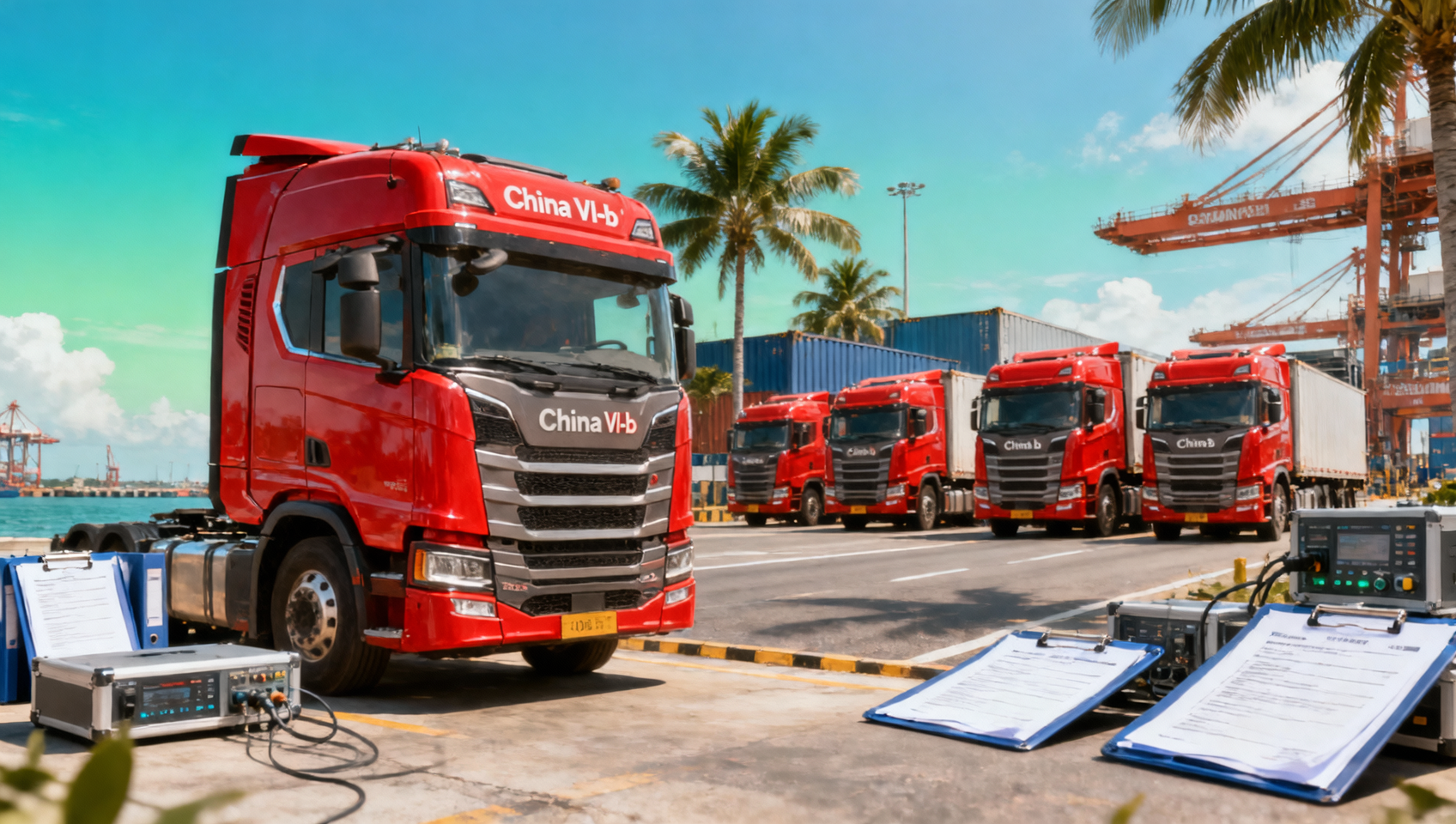
On July 8, 2026, the transport ministries of Indonesia, Vietnam, and Thailand jointly introduced a temporary ASEAN mechanism that recognizes the equivalence of China VI-b emissions standards for heavy trucks. For manufacturers, exporters, procurement teams, and supply-chain service providers, the immediate point of attention is not only faster regulatory access, but also the document and interface requirements attached to that access. The move matters because it directly targets delivery pressure tied to regional infrastructure projects and may change how eligible truck models are prepared for market entry in Southeast Asia over the next year.
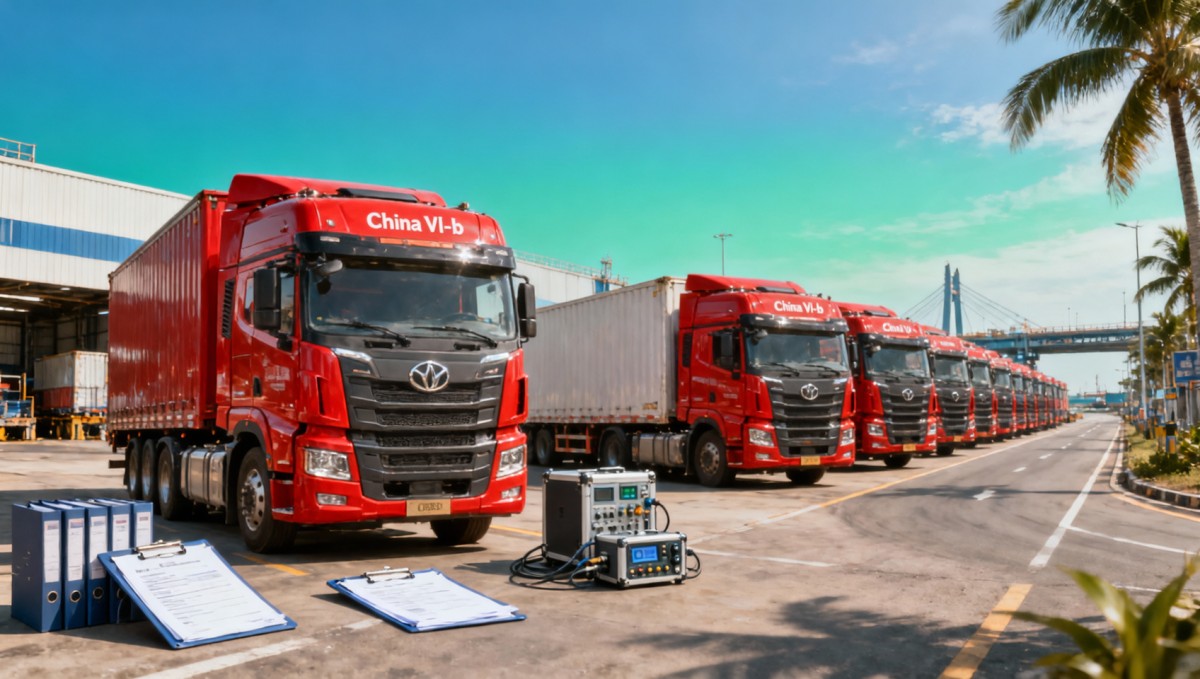
What the temporary access mechanism confirms
According to the information provided, Indonesia, Vietnam, and Thailand released the Temporary Green Access Corridor Mechanism for ASEAN Commercial Vehicles on July 8, 2026. Under this mechanism, China VI-b is accepted as an equivalent emissions standard for heavy trucks.
The mechanism applies to complete heavy-truck models that have already been certified by China’s Ministry of Ecology and Environment. To qualify, applicants must submit a complete type inspection report and the OBD data interface protocol. Once those materials are accepted, the vehicles may be exempted from local ESC/ETC bench testing and can enter the ASEAN market access list directly.
The mechanism is temporary and remains valid through June 30, 2027. Its stated purpose is to ease heavy-truck delivery pressure linked to infrastructure projects across the region.
Where the impact is likely to be felt first
Truck exporters and model approval teams
From an industry perspective, the most immediate impact is on exporters handling eligible heavy-truck models for Indonesia, Vietnam, and Thailand. The relevant business effect is concentrated in homologation preparation, submission sequencing, and launch timing. What deserves closer attention is whether each model’s certification package is complete enough to support direct listing under the temporary mechanism.
Procurement and project delivery functions
Procurement-side participants involved in heavy-truck sourcing may be affected because the mechanism is explicitly linked to delivery pressure in infrastructure-related demand. The main area of impact is procurement scheduling and order planning. Observably, buyers will need to distinguish between policy eligibility in principle and the practical readiness of each model’s supporting documents.
Supply-chain and market-entry service providers
Service providers supporting customs, compliance coordination, technical documentation, and local market entry may also see a shift in workflow. The likely impact is less about local emissions bench testing and more about document verification, interface protocol matching, and communication between exporters and destination-market authorities. What deserves closer attention is whether internal processes are ready for a documentation-led approval path rather than a locally repeated testing path.
Practical issues companies should track now
Whether a model is truly eligible under the temporary channel
Companies should first verify that the heavy-truck model has already obtained the required certification from China’s Ministry of Ecology and Environment. The mechanism does not describe a blanket opening for all products, so eligibility should be checked model by model.
The completeness of type inspection materials
The policy signal is clear, but actual market entry still depends on submission quality. Type inspection reports are not a formality in this context; they are part of the basis for exemption from local ESC/ETC bench testing. Companies should therefore review whether their documentation package is complete, current, and internally consistent before using the fast-track route in customer discussions.
OBD interface protocol as a real execution point
Analysis shows that the OBD data interface protocol is one of the most concrete operational requirements in the mechanism. For technical, compliance, and after-sales teams, this means the regulatory conversation is likely to extend beyond emissions certification itself and into data interface readiness and document clarity.
The time boundary of the mechanism
Because the mechanism is valid only until June 30, 2027, shipment planning, customer commitments, and internal approval timetables should be assessed against that window. Companies should also monitor whether later official wording changes the scope, conditions, or duration of the temporary channel.
Why this should be read as a policy signal, not a final market outcome
Analysis shows that this development is best understood as a targeted short-term regulatory adjustment with broader signaling value. On one level, it is a practical response to delivery pressure for infrastructure projects. On another, it indicates that cross-recognition of emissions compliance can become a tool for easing market access friction when timing matters.
At the same time, it is more appropriate to understand this as an opening with conditions, not as a completed structural shift in the region’s heavy-truck regulatory framework. The mechanism is temporary, document-driven, and limited to the countries and requirements described in the provided information. That is why continued observation remains necessary.
How to interpret the current development
The immediate industry meaning lies in reduced duplication in local emissions testing for qualifying China VI-b heavy-truck models entering Indonesia, Vietnam, and Thailand. For companies already active in export, procurement, compliance, or delivery coordination, the practical value is tied to speed, documentation readiness, and execution discipline rather than to broad assumptions about guaranteed market expansion.
At this stage, the development is more appropriate to understand as a near-term operational change with potential longer-term policy significance. It creates a clearer path for eligible products during the validity period, but the depth and durability of its effect still depend on implementation details and any subsequent official updates.
Basis of this article and points for continued verification
This article is based on the user-provided news title, event date, and event summary. The confirmed facts used here are limited to the July 8, 2026 announcement by the transport ministries of Indonesia, Vietnam, and Thailand, the recognition of China VI-b equivalence, the exemption conditions tied to type inspection reports and OBD data interface protocols, the direct entry into the ASEAN market access list, the mechanism’s validity through June 30, 2027, and its stated purpose of easing heavy-truck delivery pressure.
For this type of industry development, relevant source categories would typically include official government announcements, company disclosures, industry association updates, authoritative media coverage, and standards-related documents. A specific official source link was not provided in the input, so continued verification is still needed. Follow-up attention should focus on any later official clarification of scope, application procedures, and implementation details in the three affected markets.
Send Us A Message