


News center
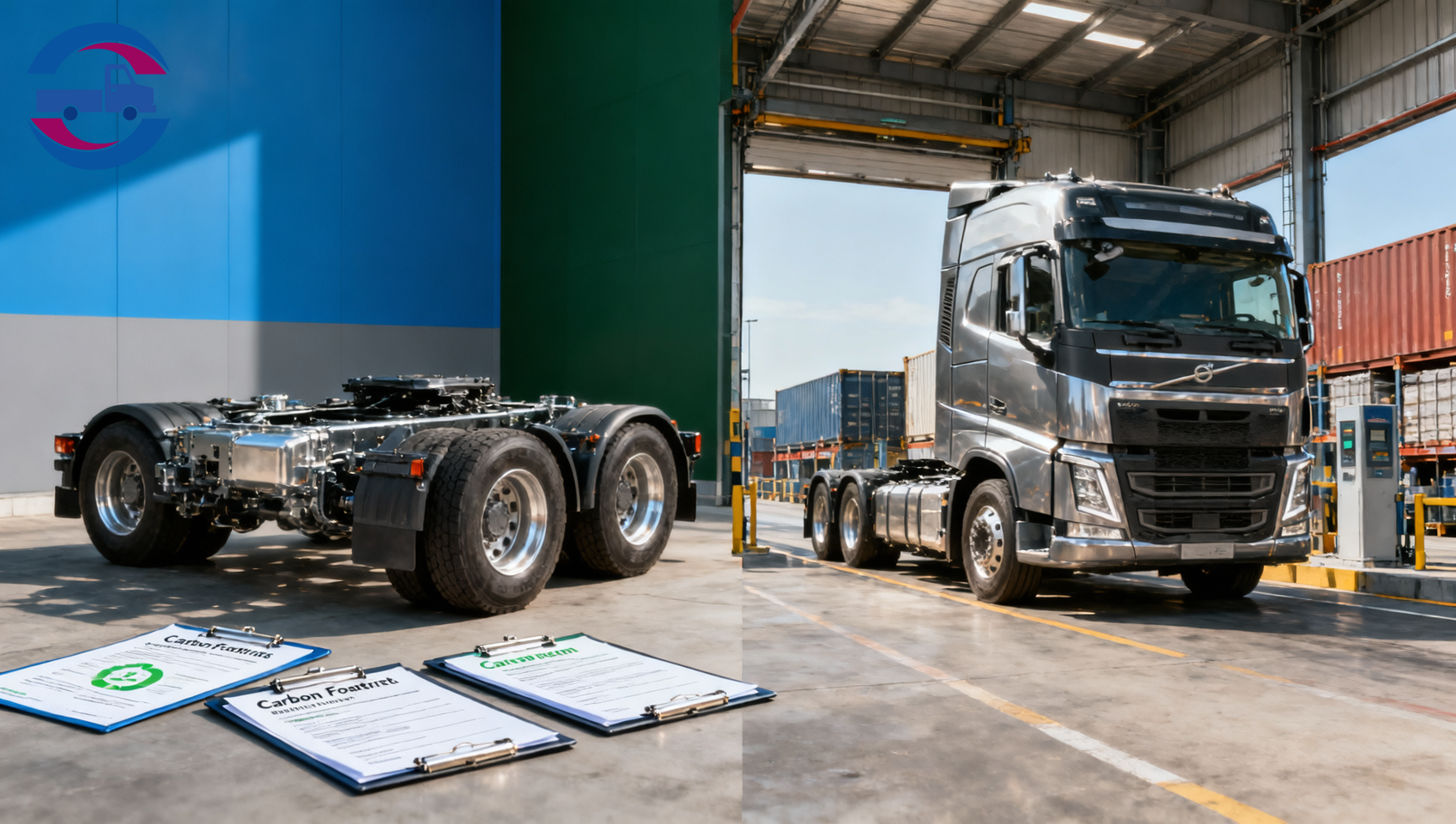
On July 1, 2026, China’s General Administration of Customs put a revised export supervision guideline into effect for new energy and low-carbon heavy trucks, adding a new documentation threshold for certain overseas shipments. For exporters of complete heavy trucks and chassis to markets such as the EU, Canada, South Korea, and Chile, the change matters because customs clearance now depends on whether a qualifying third-party carbon footprint declaration is submitted. For manufacturers, traders, compliance teams, and supply chain service providers, this is worth close attention because it reaches beyond paperwork and may affect delivery timing, customer commitments, and the practical cost of export compliance.
What the New Export Requirement Covers
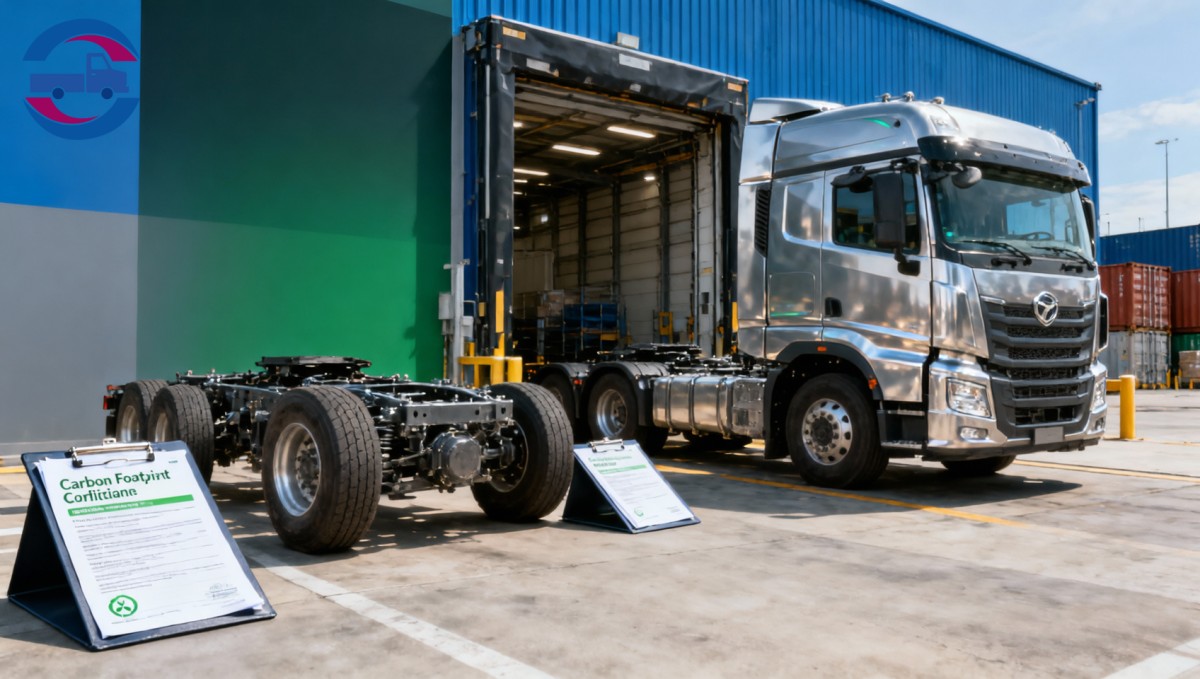
According to the provided information, China’s General Administration of Customs launched a new version of the Guidelines for Export Supervision of New Energy and Low-Carbon Heavy Trucks on July 1, 2026. Under this arrangement, all complete heavy trucks and chassis exported to countries that have established carbon tariff mechanisms, including the EU, Canada, South Korea, and Chile, must be accompanied by a third-party carbon footprint declaration issued by a CNAS-accredited institution.
The declaration must be based on PAS 2050 or ISO 14067 certification. If the required document is not submitted, the export customs clearance form will not be issued. The provided summary also states that the measure directly affects delivery cycles and compliance costs, with particular operational pressure on small and medium-sized exporters that have not yet established an LCA database.
Where the Pressure May Appear First
Exporters dealing in complete trucks and chassis
From an industry perspective, the most immediate effect is on companies directly arranging exports of heavy trucks and chassis to the listed destination markets. Their exposure is straightforward: without the required declaration, the shipment cannot move through the export clearance process. What deserves closer attention is the point where sales scheduling, document readiness, and shipment release meet, because this is where timing risk is likely to surface first.
Manufacturing and internal compliance coordination
Analysis shows that manufacturers may feel the impact through document preparation and internal data organization rather than through production changes alone. The requirement refers specifically to a third-party carbon footprint declaration under recognized standards, which means product, compliance, and export teams may need tighter coordination on what information is available, how it is presented, and whether it can support external verification in time for shipment.
Smaller exporters without an LCA database
Observably, the provided information points to a more practical challenge for small and medium-sized exporters that do not yet have an LCA database. For this group, the issue is not only the existence of a new customs requirement but also the ability to assemble the underlying basis for the declaration. The pressure may therefore appear in longer preparation cycles, higher compliance effort, and more uncertainty when confirming delivery dates with overseas buyers.
Supply chain and trade service providers
Service providers involved in export documentation, customs coordination, and shipment planning may also be affected because a new mandatory document changes the sequencing of export execution. Even when they are not the party responsible for generating the carbon footprint declaration, they may need to adjust checklist controls, timing assumptions, and client communication around release conditions.
What Companies Should Watch in Practical Terms
Whether documentation is ready before shipment booking
Analysis shows that the practical issue is not only whether the declaration can eventually be obtained, but whether it is available early enough to avoid disrupting export timing. Companies serving the covered markets should pay close attention to how the new requirement fits into their existing shipment preparation cycle.
The difference between having data and having an acceptable declaration
What deserves closer attention is the distinction between internal environmental data and a customs-usable third-party declaration. The provided information makes clear that the document must come from a CNAS-accredited institution and follow PAS 2050 or ISO 14067. In operational terms, businesses should treat these as document acceptance conditions, not as general sustainability references.
Customer communication around lead times and commitments
From an industry perspective, exporters should also watch how the rule affects contract execution and delivery communication. If declaration preparation becomes a gating step for customs clearance, then sales and customer-facing teams may need to review lead-time promises, especially for orders bound for the specifically mentioned markets.
Exposure in product scope and destination markets
The current information specifically refers to complete heavy trucks and chassis exported to countries with carbon tariff mechanisms, including the EU, Canada, South Korea, and Chile. Companies should therefore focus first on whether their affected product categories and destination markets fall squarely within that scope, and then review the corresponding export workflows.
Why This Looks Like More Than a One-Off Filing Change
Observably, this update can be read as a near-term operational change with broader policy significance, but it should not be overstated beyond the facts provided. The confirmed result is clear: a new carbon footprint declaration requirement is now tied to export clearance for covered heavy truck shipments to certain markets. Analysis shows that the larger signal lies in how carbon-related documentation is moving closer to the center of export execution rather than remaining a peripheral reporting matter.
It is more appropriate to understand this as both an immediate compliance checkpoint and a longer-term indicator that trade, product documentation, and carbon accounting are becoming more tightly connected in specific export scenarios. At the same time, further observation is still necessary because the provided information does not include additional implementation detail beyond the stated rule, standards reference, and affected export consequence.
How the Market May Best Read This Update
At this stage, the most balanced reading is that the measure creates a concrete near-term compliance requirement while also signaling a deeper shift in export readiness expectations for low-carbon and new energy heavy trucks. The direct issue is document eligibility for customs clearance; the broader issue is whether exporters can support that requirement consistently without slowing deliveries or adding avoidable friction to overseas business. It is more appropriate to understand this as an operationally important policy move that already has defined consequences, while its wider industry impact still merits continued observation.
Basis of This Article and What Still Needs Verification
This article is based on the user-provided news title, event date, and event summary. For developments of this kind, relevant source types typically include official customs notices, company disclosures, industry association updates, authoritative media coverage, and standard-related documentation. A specific official source link was not provided in the input, so the exact official publication path still needs to be verified on an ongoing basis.
Further monitoring should focus on any follow-up official wording, implementation clarifications, document handling details, and practical interpretation affecting covered products, destination markets, and declaration submission workflows.
Send Us A Message