


News center
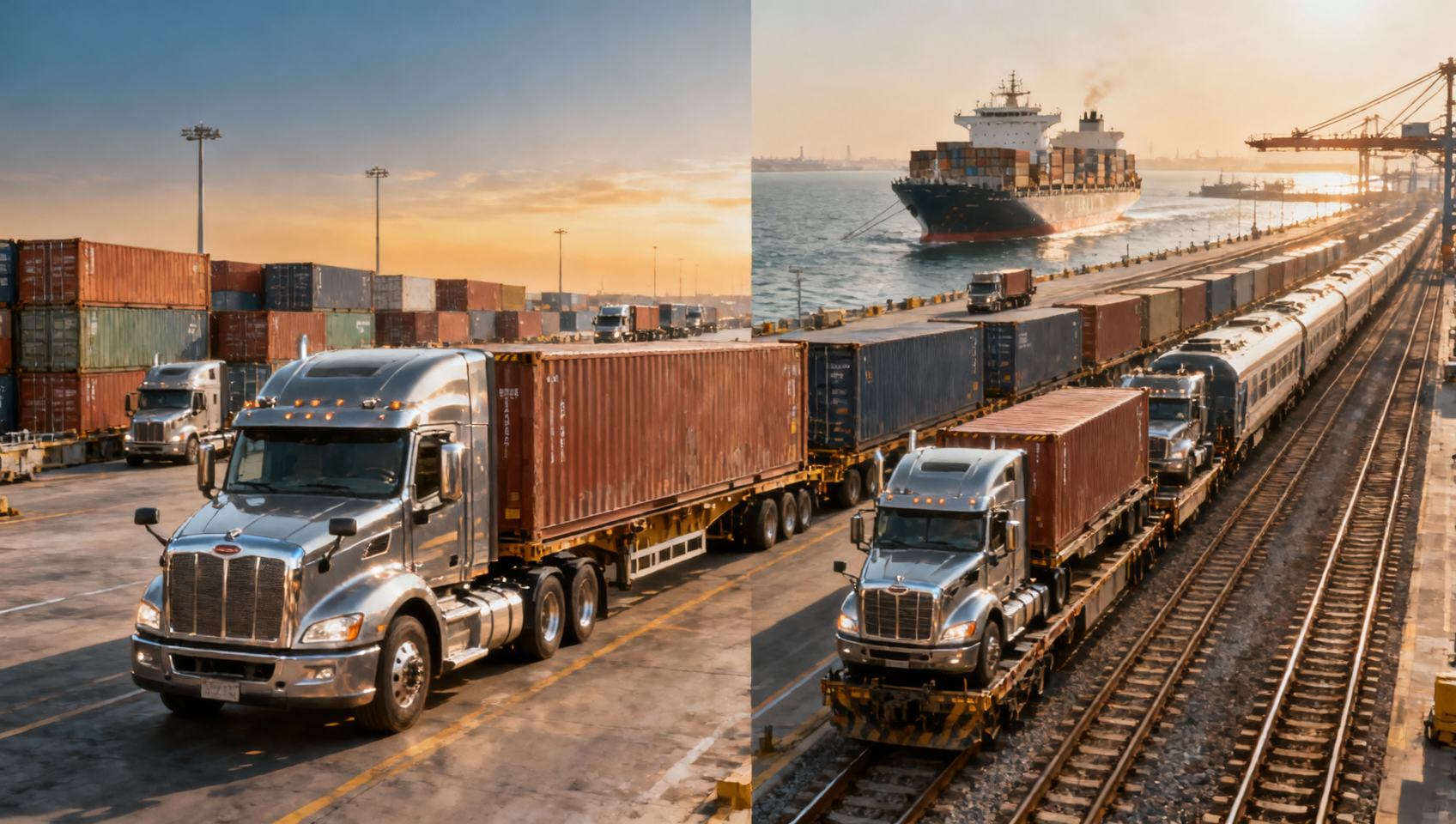
On July 6, 2026, the latest shipping and port update pointed to a sharper logistics disruption for heavy truck exports from China to the Middle East. With most Red Sea sailings diverting around the Cape of Good Hope, the average transit time for full-container heavy truck shipments from Qingdao, Tianjin, and Guangzhou to Saudi Arabia and the UAE has stretched to 47 days, up by 22 days year on year. At the same time, the newly launched Xi'an-Dubai rail link has begun carrying heavy trucks in dedicated roll-on/roll-off wagons, giving exporters, distributors, and supply chain operators a faster but more expensive alternative that is already being adopted under delivery pressure.
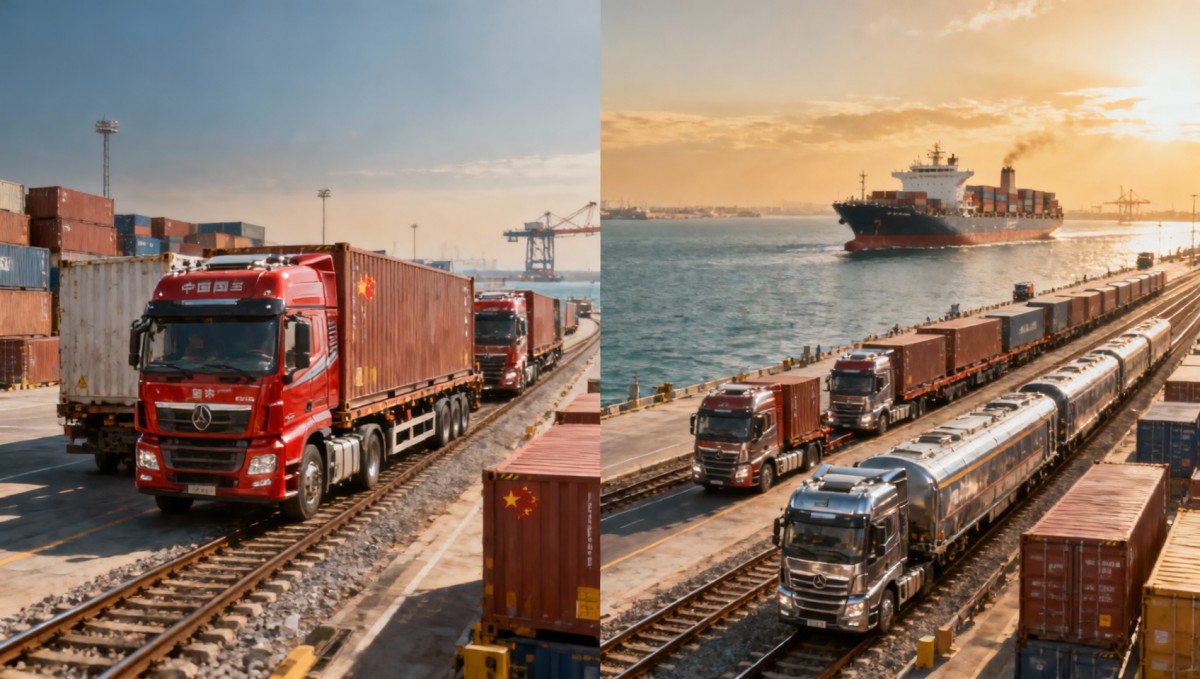
What the latest transport update confirms
According to a joint update from the Shanghai Shipping Exchange and Dubai's Jebel Ali Port, 89% of vessels on the Red Sea route were rerouted via the Cape of Good Hope in the first week of July 2026. As a result, average in-transit time for full-container heavy truck shipments from the Chinese ports of Qingdao, Tianjin, and Guangzhou to Saudi Arabia and the UAE rose to 47 days, representing a year-on-year increase of 22 days.
The same update states that the new Xi'an-Dubai rail service has opened dedicated roll-on/roll-off railcars for heavy trucks. Its first arrival was recorded on July 6. Freight on this route is 18% higher than sea shipping, but delivery time is holding at 18 days, and multiple Middle East distributors are reportedly adopting it on an urgent basis.
Where the pressure is likely to be felt first
Exporters are facing a direct delivery-time reset
From an industry perspective, heavy truck exporters shipping to Saudi Arabia and the UAE are the first group affected because the reported change is not limited to freight cost alone; it changes the delivery cycle itself. A transit time extending to 47 days can affect shipment planning, order sequencing, and the timing of outbound fulfillment for containerized truck exports.
What deserves closer attention is whether exporters treat the rail option as an exception for urgent orders or as a structured part of their delivery mix, given that the faster route comes with an 18% freight premium.
Middle East distributors are being pushed toward route selection decisions
Observably, distributors in the destination market are already responding by using the new rail corridor. For this group, the practical issue is not only landed cost, but also whether vehicle arrivals can match sales, allocation, or downstream delivery commitments. The contrast between a 47-day sea transit and an 18-day rail schedule makes transport mode selection a more immediate commercial decision.
They will need to watch how consistently the rail service maintains its stated delivery timeline as more urgent cargo shifts toward it.
Supply chain service providers must manage two different service logics
Freight forwarders, multimodal operators, and related logistics service providers are likely to be affected through booking strategy, customer communication, and execution planning. Sea freight is now associated with materially longer in-transit time, while rail offers a shorter and more stable schedule at a higher price. That creates a split-service environment in which customers may ask for differentiated solutions based on urgency rather than a single standard route.
Analysis shows that service providers will need to monitor not just freight rates, but also schedule reliability and capacity coordination around the new dedicated heavy truck railcars.
What companies should monitor now
Order segmentation by urgency
Analysis shows that companies shipping heavy trucks to Saudi Arabia and the UAE should first distinguish between time-sensitive and standard orders. The current gap between 47 days by sea and 18 days by rail is large enough to affect fulfillment planning, especially where delivery dates matter more than pure freight savings.
Customer communication around revised lead times
What deserves closer attention is how delivery commitments are being communicated to overseas distributors and buyers. Where sea freight remains in use, the longer in-transit period should be reflected clearly in lead-time discussions. Where rail is used, the cost increase versus sea freight may also need to be addressed in commercial negotiations.
Execution details for the new rail option
Observably, the Xi'an-Dubai route is no longer only a theoretical alternative because the first train has already arrived and dedicated heavy truck wagons are in operation. Companies considering this channel should therefore focus on practical execution points tied to bookings, shipment planning, and documentation readiness, rather than assuming that a new route automatically fits every order.
Ongoing validation of route stability
From an industry perspective, one of the most important near-term tasks is continued verification. The sea route is being affected by a very high diversion ratio, while the rail route is being adopted under urgent demand. Businesses should keep watching whether those conditions remain stable enough to support recurring planning decisions.
Why this matters beyond a single delay update
Analysis shows that this development should not be read only as a shipping delay notice. It highlights a more operational issue for China-Middle East heavy truck trade: when ocean routing becomes less predictable, the market begins assigning a higher value to schedule certainty, even at a higher transport cost. The urgent uptake of the Xi'an-Dubai rail service suggests that for some transactions, delivery reliability is currently outweighing the traditional cost advantage of sea freight.
At the same time, it is more appropriate to understand this as an industry dynamic still in motion rather than a settled long-term shift. The available facts confirm disruption in sea transit and the launch of an alternative corridor, but they do not yet prove that modal substitution has become the new default across the whole trade lane.
How this update is best understood for now
For the heavy truck export trade between China and the Middle East, the latest update points to a real logistics constraint with immediate commercial consequences. The longer sea transit time affects delivery planning directly, while the new rail route introduces a faster option with a measurable cost tradeoff. A balanced reading is that the market is entering a period of route re-evaluation rather than a permanent restructuring that can already be taken for granted.
Current conditions are better understood as a short-term operational change with potential longer-term implications, and the next phase will depend on whether sea-route disruption persists and whether the rail alternative can maintain stable execution as adoption expands.
Basis of this article and what still needs verification
This article is based on the user-provided news title, event date, and event summary. The reported facts used here derive from the cited joint update involving the Shanghai Shipping Exchange and Jebel Ali Port, as described in the input. For this type of industry development, common source categories usually include official notices, port announcements, company statements, industry association updates, and reporting from established trade media.
No specific official source link was provided in the input, so the underlying source documents still need to be continuously verified. Follow-up attention should focus on whether Red Sea vessel diversions remain at similarly high levels, whether sea transit times continue to hold at current levels, and whether the Xi'an-Dubai heavy truck rail service sustains its stated 18-day delivery performance as adoption grows.
Send Us A Message